
Introduction: What Is Tai Chi Walking?
Tai chi walking is a slow, intentional style of movement rooted in traditional tai chi practice. Unlike ordinary walking, tai chi walking emphasizes mindfulness, balance, posture, breath control, and energy flow. Each step is deliberate, grounded, and coordinated with relaxed breathing and mental focus.
In today’s fast-paced world, tai chi walking offers a powerful way to slow down, reconnect with the body, and restore calm—making it ideal for beginners, seniors, athletes, and anyone seeking a gentle yet effective movement practice.
Whether practiced indoors or outdoors, tai chi walking transforms a simple act into a moving meditation that nurtures both physical health and mental clarity.
The Origins of Tai Chi Walking
Tai chi walking comes from Tai Chi Chuan, an ancient Chinese martial art developed for self-defense, longevity, and internal energy cultivation. While tai chi forms are often practiced in place, walking is fundamental to tai chi training.
Traditional masters used walking drills to teach:
- Rooting and balance
- Weight shifting and alignment
- Smooth energy transitions
- Calm awareness in motion
Over time, tai chi walking evolved into a standalone practice used for health, meditation, and rehabilitation.
Key Principles of Tai Chi Walking
Tai chi walking is built on a few essential principles that distinguish it from normal walking:
1. Slow and Continuous Movement
Movements are unhurried and fluid. There is no stopping or rushing—each step flows naturally into the next.
2. Weight Shifting
Before lifting a foot, weight fully transfers to the standing leg. This builds stability, leg strength, and body awareness.
3. Upright and Relaxed Posture
The spine stays tall, shoulders relaxed, and chest soft. Good posture allows efficient movement and deep breathing.
4. Heel-to-Toe Placement
Steps typically begin with the heel touching the ground first, then rolling gently through the foot.
5. Mindful Attention
Awareness stays with the body, breath, and sensations. This mental focus is what turns walking into meditation.
How to Practice Tai Chi Walking (Step-by-Step)
Step 1: Begin in Neutral Stance
Stand with feet shoulder-width apart, knees soft, arms relaxed by your sides. Take a few slow breaths.
Step 2: Shift Your Weight
Gently shift your weight onto your left leg until it feels rooted and stable.
Step 3: Step Forward Slowly
Lift the right foot and place the heel down first. Slowly roll the foot forward until it is fully grounded.
Step 4: Transfer Weight
Gradually shift your weight onto the front foot. Only when fully stable does the back foot lighten.
Step 5: Continue Smoothly
Repeat on the opposite side, maintaining even breathing and relaxed focus.
Tip: Imagine moving through water—smooth, soft, and controlled.
Health Benefits of Tai Chi Walking
Tai chi walking offers a wide range of physical, mental, and emotional benefits:
Physical Benefits
- Improves balance and coordination
- Strengthens legs and core muscles
- Enhances joint mobility
- Supports posture and spinal alignment
- Reduces risk of falls
Mental and Emotional Benefits
- Reduces stress and anxiety
- Improves focus and concentration
- Encourages emotional regulation
- Promotes relaxation and mental clarity
Energy and Wellness Benefits
- Supports circulation and vitality
- Encourages gentle cardiovascular activity
- Cultivates body awareness and presence
Because it is low-impact, tai chi walking is suitable for all fitness levels, including beginners and older adults.
Tai Chi Walking vs Regular Walking
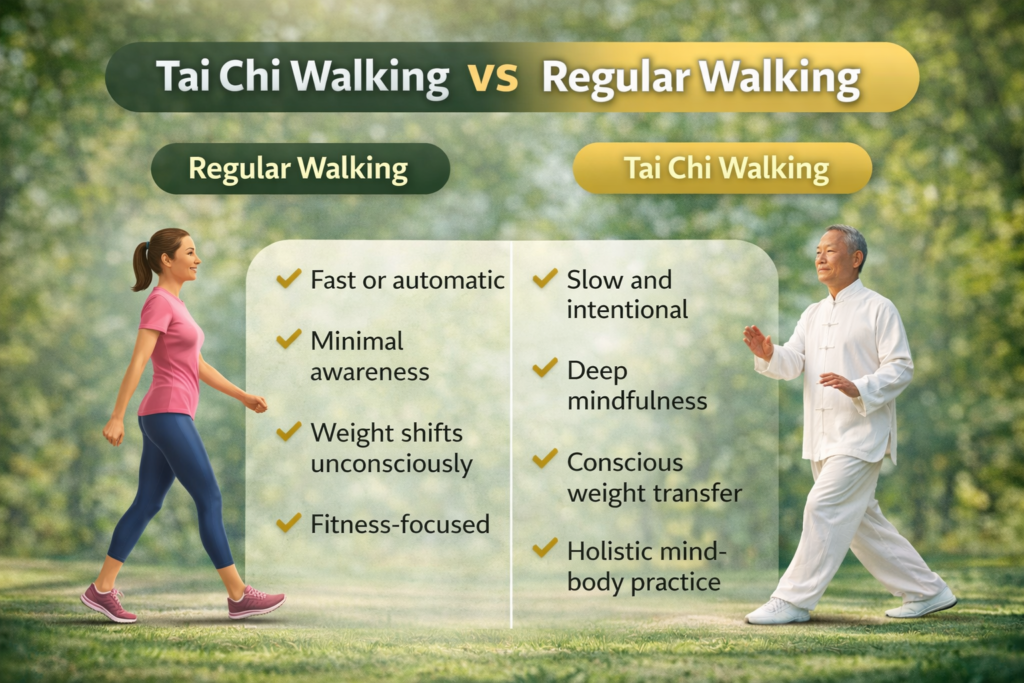
| Regular Walking | Tai Chi Walking |
|---|---|
| Fast or automatic | Slow and intentional |
| Minimal awareness | Deep mindfulness |
| Weight shifts unconsciously | Conscious weight transfer |
| Fitness-focused | Holistic mind-body practice |
Tai chi walking is not about distance or speed—it’s about quality of movement and inner calm.
Best Places to Practice Tai Chi Walking
You can practice tai chi walking almost anywhere:
- Quiet parks or gardens
- Beaches or forest paths
- Living rooms or hallways
- Meditation or yoga spaces
Choose a space where you feel safe, relaxed, and free from distractions.
Common Mistakes to Avoid
- Rushing the steps
- Leaning forward or backward
- Holding tension in shoulders or jaw
- Forgetting to breathe naturally
- Lifting the foot before fully shifting weight
Gentleness and patience are key. Progress comes from consistency, not force.
Who Can Benefit from Tai Chi Walking?
Tai chi walking is ideal for:
- Beginners new to tai chi
- Seniors seeking safe movement
- People recovering from injury (with medical approval)
- Busy professionals needing stress relief
- Anyone interested in walking meditation
It can be practiced alone or combined with full tai chi forms, qigong, or mindfulness training.
Incorporating Tai Chi Walking Into Daily Life
You don’t need long sessions to benefit. Try:
- 5–10 minutes in the morning
- A short mindful walk during breaks
- Evening practice to unwind
- Using tai chi walking as a warm-up or cool-down
Practiced regularly, it becomes a calming ritual that supports both body and mind.
Conclusion: Walking With Awareness
Tai chi walking turns an everyday activity into a powerful practice of presence, balance, and inner peace. By slowing down and moving with intention, you reconnect with your body and create space for calm in your daily life.
Whether you are just beginning or deepening your tai chi journey, tai chi walking offers a simple yet profound path toward better health and mindful living.
