
We are often told that effective weight loss requires sweat, high intensity, and a “no pain, no gain” attitude. We see images of people sprinting on treadmills or lifting heavy weights, leaving many to believe that if they aren’t exhausted by the end of a workout, it didn’t count. But what if the secret to sustainable weight management wasn’t about moving faster, but moving smarter?
Tai Chi walking is challenging the conventional wisdom of the fitness world. This ancient practice, often described as “meditation in motion,” turns the simple act of walking into a powerful exercise for the mind and body. While it may look gentle from the outside, the internal engagement required to perform it correctly ignites the metabolism and strengthens the core.
For those seeking a way to manage their weight without the joint impact of running or the intensity of CrossFit, Tai Chi walking offers a compelling alternative. It bridges the gap between physical exertion and mental clarity, offering a holistic approach to health that is gaining traction among modern fitness enthusiasts and health professionals alike.
The Science of Low-Impact Exercise
To understand how a slow-moving practice helps you lose weight, we need to look at how the body burns energy. High-intensity workouts rely on glycogen (sugar) for quick bursts of energy. Low-to-moderate intensity exercises, however, tend to oxidize fat as a primary fuel source. This is often referred to as the “fat-burning zone.”
Metabolic Consistency
Tai Chi walking keeps your heart rate in a moderate zone where you can sustain movement for longer periods. While a 15-minute sprint burns calories quickly, it is physically taxing and requires significant recovery time. A 45-minute session of Tai Chi walking can be performed daily without fatigue, leading to a higher total calorie expenditure over the course of a week.
Muscle Engagement
Unlike casual strolling, Tai Chi walking requires deep concentration and continuous muscle tension. You are constantly maintaining a semi-squat position (keeping the knees soft), which engages the large muscle groups in the legs—the quadriceps, hamstrings, and glutes. Activating these large muscles demands significant energy, increasing your metabolic rate even though you aren’t moving quickly.
Tai Chi vs. Traditional Cardio
When compared to traditional cardio like jogging or aerobics, Tai Chi walking offers distinct advantages, particularly for longevity and joint health.
Impact and Sustainability
Running generates a force of roughly 2.5 times your body weight with every step. Over time, this can lead to wear and tear on the knees, hips, and ankles, often forcing people to stop exercising to recover from injuries. Tai Chi walking is a closed-chain kinetic exercise where your foot is placed deliberately and gently. The impact is minimal, making it a sustainable practice you can continue for decades.
Energy Expenditure
Does it burn as many calories as a fast run? Minute for minute, no. However, studies have shown that Tai Chi can burn a similar amount of calories to brisk walking or surfing. The difference lies in the quality of the movement. Because it improves balance, posture, and muscle tone simultaneously, it offers a more comprehensive workout than simply walking on a treadmill.
Stress Reduction: The Hidden Weight Loss Factor
One of the most overlooked barriers to weight loss is stress. When you are stressed, your body produces cortisol. Elevated cortisol levels are scientifically linked to increased abdominal fat storage and cravings for high-sugar, high-fat foods. This is where Tai Chi walking truly shines compared to high-intensity workouts, which can sometimes temporarily spike cortisol levels due to physical stress.
The Cortisol Connection
Tai Chi walking emphasizes deep, rhythmic breathing and mental focus. This activates the parasympathetic nervous system—the body’s “rest and digest” mode. By lowering cortisol levels through mindful movement, you create a hormonal environment in your body that is more conducive to burning fat rather than storing it.
Mindful Eating
The mindfulness practiced during Tai Chi often spills over into other areas of life. Practitioners frequently report being more in tune with their bodies, which can lead to better choices regarding nutrition and a reduction in emotional eating.
Step-by-Step Guide to Tai Chi Walking
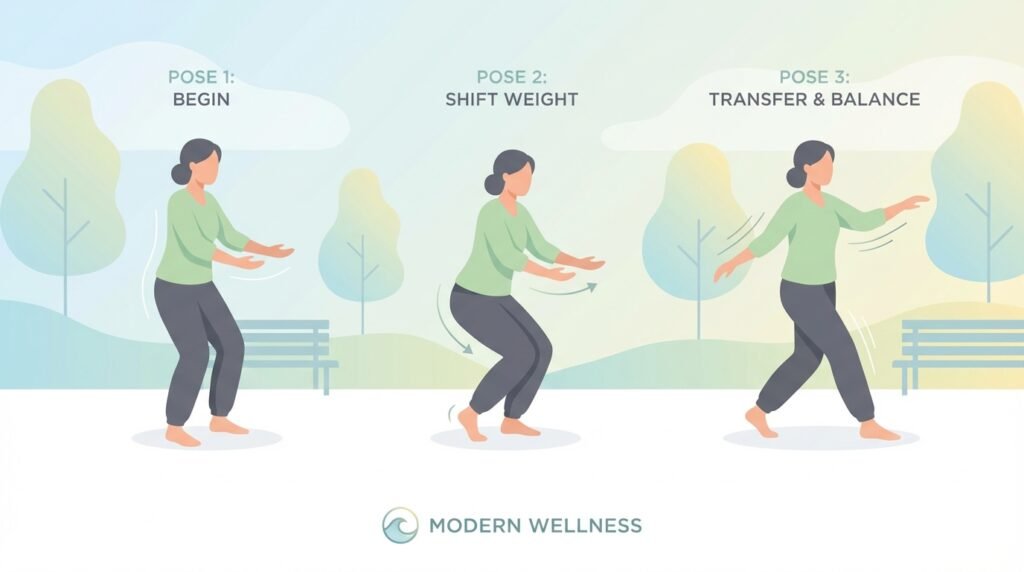
Ready to try it? You don’t need a studio or special equipment. Follow these steps to transform your walk into a workout.
1. The Posture
Stand tall with your feet shoulder-width apart. Imagine a string pulling the crown of your head toward the sky. Relax your shoulders and tuck your chin slightly. Keep your knees “soft” (slightly bent) never locked.
2. Weight Shifting
This is the core of the practice. Before you take a step, shift 100% of your weight onto your right leg. Your left leg should be completely empty of weight, ready to move freely.
3. The Step
Slowly lift your left foot and place the heel down first, rolling gently onto the sole. Do not transfer your weight yet. Ensure your footing is secure.
4. The Transfer
Once the foot is placed, imagine pouring water from a pitcher. Slowly pour your weight from the right leg into the left leg. Move from your hips/center (your Dan Tian).
5. Arm Movement
As you step with your left foot, your right arm can gently float forward in a pushing motion, while the left arm floats back. The arms should move fluidly, as if moving through water.
Incorporating Tai Chi into a Busy Routine
For young professionals balancing career, social life, and health, finding time for the gym is difficult. Tai Chi walking is versatile because it can be integrated into parts of your day that already exist.
- The Commute: If you walk to the train or bus, slow your pace for the last 5 minutes. Focus on the heel-to-toe roll and deep breathing.
- Lunch Breaks: Instead of sitting at your desk, find a quiet corner of a park or even an empty hallway. Ten minutes of mindful walking can reset your focus for the afternoon.
- Morning Ritual: Before checking your phone, spend five minutes pacing your living room. It sets a calm tone for the day and wakes up your metabolism.
People Also Search For
How many calories does Tai Chi burn?
While it varies by weight and intensity, a 155-pound person can burn approximately 280-300 calories per hour practicing Tai Chi.
Is Tai Chi better than walking for weight loss?
It can be more effective than casual walking because the semi-squat position and controlled movements engage more muscles and core strength, potentially burning more calories than a leisurely stroll.
Can beginners do Tai Chi walking?
Absolutely. It is one of the most accessible exercises available, suitable for almost all fitness levels and ages due to its low impact on joints.
Frequently Asked Questions
Can you lose belly fat with Tai Chi walking?
Yes, but it is a combination of factors. The physical calorie burn contributes to a calorie deficit, while the stress-reducing aspects help lower cortisol, a hormone responsible for stubborn belly fat.
How often should I practice to see results?
Consistency is key. Aim for at least 30 minutes, five days a week. Because it is low impact, you can safely do it every day without needing “rest days” for muscle recovery.
Do I need special clothing?
No. You simply need comfortable clothing that allows for a full range of motion. Flat-soled shoes are recommended to help you feel the ground and maintain balance.
Conclusion
Weight loss doesn’t always have to be a race. Tai Chi walking offers a path to health that respects the body rather than punishing it. By combining the metabolic benefits of movement with the hormonal balance of str
