
Tai Chi Walking for Beginners: Step by Step
Want to learn a new, fun way to improve your balance and decrease your stress? Tai Chi Walking for Beginners Step by Step is a perfect starting point! This practice, like many other practices, improves harmony through meditation. Tai Chi Walking transforms normal, everyday walking, into an enjoyable, focused practice.
This guide is designed to teach you what you need to know for Tai Chi Walking. Guides include benefits, instructions, and starting tips, so you can practice Tai Chi and build your foundation.
Tai Chi Walking is sometimes called walking like a cat. Once you experience Tai Chi Walking, you will understand why it is called this. Tai Chi Walking attempts to capture the movement and stealth of a cat through focused, slow, and deliberate movement.
This practice is an important and foundational step of Tai Chi to help students become aware of their posture, movement, energy, and overall balance.
What is Tai Chi Walking?
Tai Chi Walking is an exercise that is taken from Tai Chi Chuan, an internal martial art from China, that is simple to learn yet very powerful. Tai Chi Walking is more than just regular walking.
Practitioners shift their weight deliberately, keep their center of gravity low, and qi (life energy) is cultivated through the actions and intentions of the walking. Tai Chi Walking is often characterized as a moving meditation and is known to be practiced by all ages and fitness levels, as practitioners can complete the exercise indoors or outdoors.
Because it offers the opportunity to develop fundamentals that are applicable to later advanced levels of Tai Chi, it is popular as an introductory practice. This includes the Yang style steps used in moves such as “Parting the Wild Horse’s Mane” or “Repulse Monkey.”
This practice is different from normal walking in that it employs different movements based on rooting (connected and grounded to the Earth), and a more relaxed posture and waist-driven movement.
While walking more therapeutic and beneficial than most people realize, not focusing on distance or pace improves walking from simply being a means of transport to a more purposeful, presenced, and fluid activity. This is especially the case in Tai Chi Walking.
Advantages of Tai Chi Walking For Newbies
Adding tai chi walking to your everyday activities can help you live a healthier life. Here are some of the advantages of tai chi walking backed by scientists and practitioners.
- Improved Balance and Fall Prevention: tai chi walking improves your stability and reduces your chances of falling by strengthening your core and legs. This is especially beneficial for older people.
- Pain Relief and Joint Health: Tai chi walking promotes smooth movements and gives relief to arthritis, back pain and stiff joints.
- Stress Reduction and Mental Clarity: Tai Chi walking is a form of mindful walking and by focusing on your breathing, you can relax and increase your mental focus. Stress levels decrease as your mood increases.
- Better Posture and Energy Flow: Tai Chi walking increases your energy and relaxes you by improving your posture.
- Accessibility: Walking tai chi requires no special gear other than comfy shoes, so it’s nice for beginners. You can do it in a tiny space, and it can also be done in activities like when you’re in line or waiting to buy something.
Tai chi walking is beneficial for newbies who want to try mindful movements, as research backs walking tai chi to improve overall health.
Steps to Practice Tai Chi Walking
Let’s go through some steps of Tai Chi Walking together! Get started Tai Chi walking by choosing a quiet, undisturbed space with a minimum of 6 feet of space to walk back and forth.
Get comfy and slip on some flat shoes that won’t slide off, don’t wear anything goofy that will make you slip, like flippers or rollie skates. Make sure your Tai Chi walking is slow, it’s all about relaxation and breathe. So do exactly that!
- Get Your Pose Set
Stand up straight, your feet should be shoulder-width apart, and your knees should be bent a little so that your legs are loose, and evenly distribute your weight to even out your right and left sides. Keep your head up, and look forward instead of down at your feet. Breath in and out deeply a couple times to help bring your balance and focus to a center. - Focus on Weight Centering
In Tai Chi walking, and practicing Tai Chi in general, you have to center your weight on one leg, in this case, your left leg. Center your weight on your left leg and imagine you are like a tree, with one leg being the trunk, strong and steady. Your supporting left leg should be stable but not locked. The right leg is prepared to move and should be your “empty leg” with no weight placed on it. - Mindful Foot Lifting
In a slow, yet mindful way, peel the “empty” foot, this time your right foot, and lift it off the ground. You aim should be to keep a soft and slow lift that mimics a stealthy, smooth cat. - Put Your Heel Down
Kick the lifted foot out in front of you and put the heel down. Your toes should stay pointed forward and stay on the path of the railroad tracks, meaning don’t duck out. - Roll Your Foot
With the heel down, roll the foot down to the toes. Your weight should have moved from the back leg to the front. This to the front movement should come from your waist. Breathe in your own rhythm, but try to stay consistent with in and out as you lift and put down. - Repeat and Alternate
Now, your weight should be completely on the front leg. Do the same movement with the other leg. Try to do forward walking, and when you feel ready, try steps backward, keeping your balance and stepping heel-first. 5-10 minutes each day is a good time.
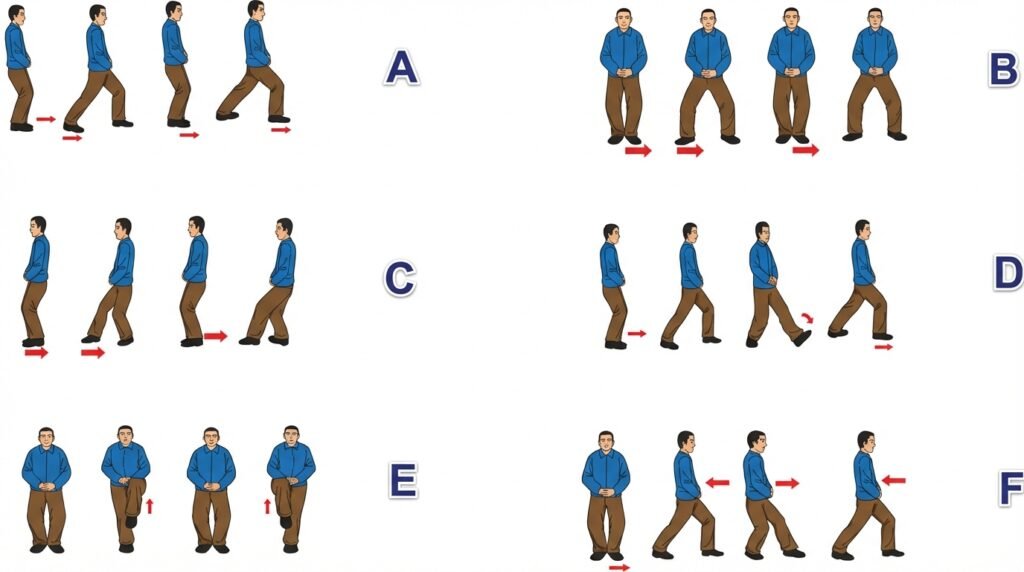
Some styles involve a slide where the foot placed hovers just above the ground. You can use these to help with your balance, too, by using a wall or a chair.
Tips for Beginners to Master Tai Chi Walking
- Start Slow: Speed is something you earn, so don’t rush. Speed is something that comes with practice and time. Focus on the steps, the quality of those steps.
In Tai Chi Walking, these tips help you get the most out of the mind-body practice.
- Incorporate Breathing
Coordinating your breath with the movements will promote relaxation and improve your energy flow. - Practice Anywhere
You can practice Tai Chi Walking at home, during a walk in the park, and really anytime you want to. - Track Progress
Motivational hacks like beginner tutorials or 30-day challenges help you stay on track. - Listen to Your Body
You should consult a professional and stop if you’re feeling pain that is beyond mild discomfort. - Combine with Other Practices
After you are feeling comfortable with Tai Chi Walking, you can definitely combine it with standing meditation, and integrate it with the full Tai Chi forms.
Common Mistakes to Avoid in Tai Chi Walking
Some errors may slow down your progress in Tai Chi Walking:
- Locking Knees or Joints
Keeping knees and joints fluid will help the energy flow. - Looking Down
Keeping your head up will help your balance. - Rushing Steps
When you walk fast, it makes the movements less effective and can make you lose your form. Focus on being as slow as you can. - Tensing Arms or Shoulders
Make your arms hang more loosely at your sides. - Ignoring the Waist
You should initiate every step with your core, not just your legs.
Avoiding these will help you get the most fully transformative experience of Tai Chi Walking.
Conclusion: Start Tai Chi Walking to Enjoy Better Health
Beginners tai chi walking step by step is more than just a ways to get a workout. It will help you bring focus and energy to your life. You’ll improve your balance, reduce your pain, and feel more relaxed the more you practice.
Try online tutorials and local classes to enrich your experience. The most important parts of tai chi walking is patience and being present. Tai chi walking is a fun way to work on being present. Enjoy your walks!
